
Co-op & Experiential Learning
Combining rigorous academics with a variety of experiential learning opportunities
Northeastern’s approach to education combines rigorous academics with experiential learning anchored by our world-renowned cooperative education program. Experiential learning encompasses our co-op program as well as research, global experiences, service learning, and student organizations.
Cooperative Education
Co-op affords students the chance to work in engineering practice prior to graduation. Through this program, undergraduate and graduate students gain hands-on, professional experience as well as a chance to build personal connections and contacts within their field of interest. Undergraduate students typically work six months at a time doing two to three co-ops while a student. Graduate students can do an internship or a co-op. Their co-op is either 4-, 6-, or 8-months in length. Co-op opportunities are offered locally, nationally, and globally.
On co-op, students learn requisite skills that cannot be learned in a classroom. The co-op experience enables students to select a career path that is right for them, while giving them a competitive edge upon graduation and earning income. The level of responsibility a student has on co-op grows as their engineering and professional skills develop. With co-op, students may explore different types of companies and work environments, such as being employed at large or small companies, working in design, product development, test, or research.
Student Co-op Experiences

Beyond the Comfort Zone: An Undergraduate’s Journey to Quantum Research
Through co-ops and research, Evan Clifford, BS’26, electrical engineering, discovered his passion for quantum computing—a realization that is now shaping his path to graduate school and led to his first publication in the Journal of Optics.
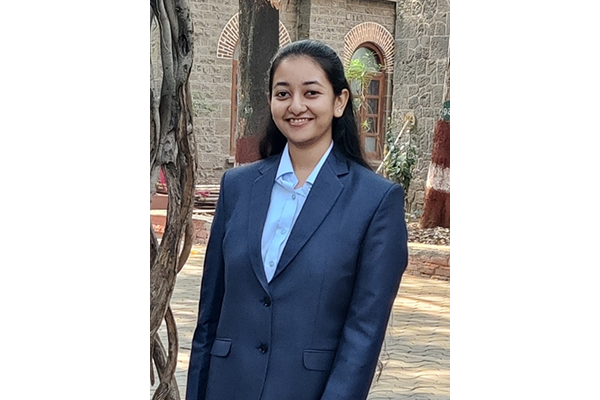
Shalini Agrawal’s Journey in Robotics from “Scratch”
Shalini Agrawal, MS’26, robotics, works as a robotics software engineer co-op at Orpheus Ocean, where she’s applying the state estimation and sensor integration skills she developed at Northeastern’s Field Robotics Lab. After graduation, she plans to bring her hands-on experience to industry, advancing autonomous robotics systems at scale.
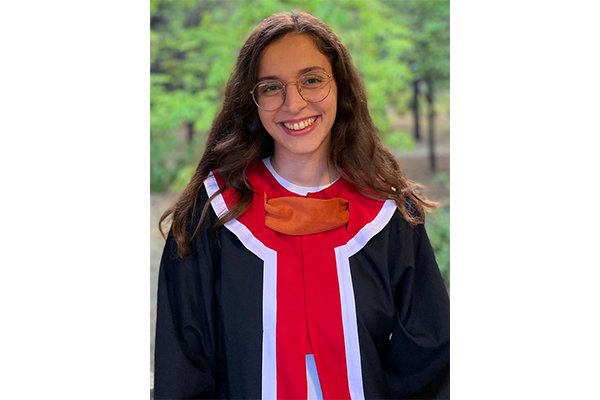
New and Knowledgeable Experiences Through LEADERs
Elifnur Sunger, MS’25, PhD ’26, electrical engineering, reflects on her internship at Sanofi-blending machine learning and biology-as well as crucial lessons from the LEADERs Program.
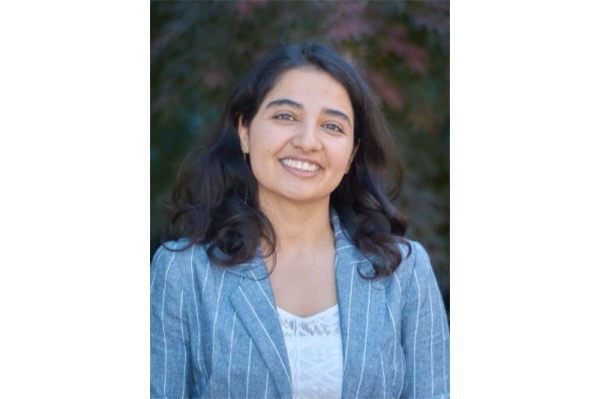
Motivation to Innovation: Passion for Improving Lives
Shaghayegh Mesforoush, PhD ’26, electrical and computer engineering, is a graduate researcher at eSOIL at Northeastern. Shaqo values hand-on experiences and uses her passion for positive impact to pioneer innovative research in the medical field.
Co-op Employers
Here is a sampling of co-op employers for electrical and computer engineering students:
| Advanced Micro Devices Amazon Robotics Analog Devices Apple Bose Boston Engineering Boston Red Sox Cisco Draper Hasbro IBM Intel | iRobot Jacobs Engineering Group Lockheed Martin Medtronic MIT Lincoln Lab Raytheon SimpliSafe SpaceX Starry Tesla WHOOP |
Sample Testimonials about ECE Co-op Positions from Students
See the below poster presentations to learn what previous students have gained from actual co-op positions at specific employers.
Information for Employers
Student Areas of Expertise
The Department of Electrical and Computer Engineering spans all sub-disciplines of electrical and computer engineering. We encompass robotics (from control systems to embedded systems), the IoT (from networking and communications to computer systems and architectures to security) and Big Data (from machine learning to signal processing to enabling technologies for data centers). We have strength in devices and microelectronics, RF/microwave materials, and power electronics and systems.
Employer Benefits
- A simple, cost-effective way to meet hiring needs: no fringe benefits, no recruitment costs. Co-op students are paid as temporary hourly employees.
- Support your engineering team with capable engineering students.
Six-month co-op periods allow students to work on long term projects and make significant contributions to the workplace. - The ability to schedule back-to-back co-op periods for full-time coverage or select six-month periods for busy times.
- Potential pipeline for future full-time hires and industry leaders.
Students offer an enthusiastic, fresh perspective and up-to-date technical knowledge and skills.
Employer Testimonials
“The student is a very intelligent and highly driven individual who took full advantage of the learning opportunities during his time with us. We were very impressed with the results he produced.”
—Dell EMC Corporation
“My co-op student is a very bright young engineer with a great attitude. She was a great asset to my team here at Raytheon in the MET department. She is very mature, can work independently, and is a great team player. I look forward having her work here again as a co-op or possible new hire.”
—Raytheon Integrated Defense System
“Student demonstrated exceptional curiosity and passion for robotics. He resurrected some robots that were just gathering dust and was able to get them fully functional and performed some experiments with them. He was outstanding! He worked on many projects and his contributions will benefit the department after he’s gone.”
—iRobot
“Co-op student is a very fast learner who efficiently carries out her job functions. She had the desire to learn the other aspects to the Safety Groups functions and was able to assist the engineers and technicians with general safety testing.”
—Bose Corporation
Making Notable Advancements in Neuro-Engineering
Electrical & Computer Engineering student Spencer Lake Jacobs-Skolik shares his experience leading research, becoming a published author, and earning a Goldwater Scholarship – all as an undergraduate. Learn how Northeastern University’s College of Engineering provides research opportunities you can’t find anywhere else, and how those experiences prepare passionate students for successful careers.
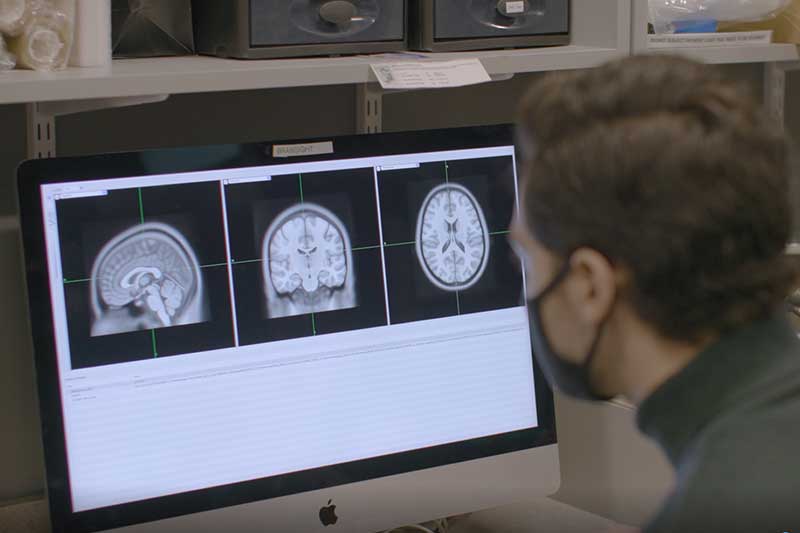
Getting a Competitive Edge on Co-op
Noah Lichtenstein, BS, computer engineering and computer science, says the integrated way of learning and experience with co-op will allow him to jump in to a job when he graduates. So far he’s had a co-op at Starry, an internet startup, and Amazon Robotics as a firmware engineer, and feels this experience will give him a decent leg up.
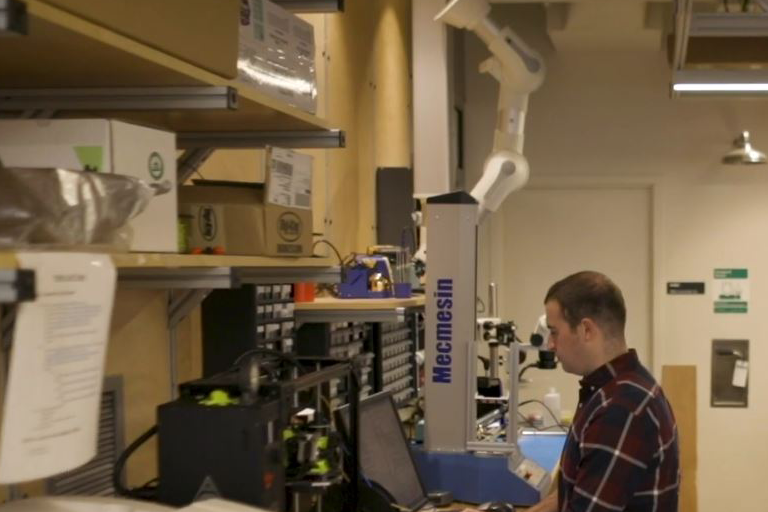
Three Co-ops, Three Different Experiences
Sofia Vanessa Benitez Quevedo, BS, electrical engineering, completed three co-ops near and far including iRobot as a systems engineer, Flex in California working on emerging tech on the internet of things, and Starry, a start up in Boston using cutting-edge technology for the next generation.
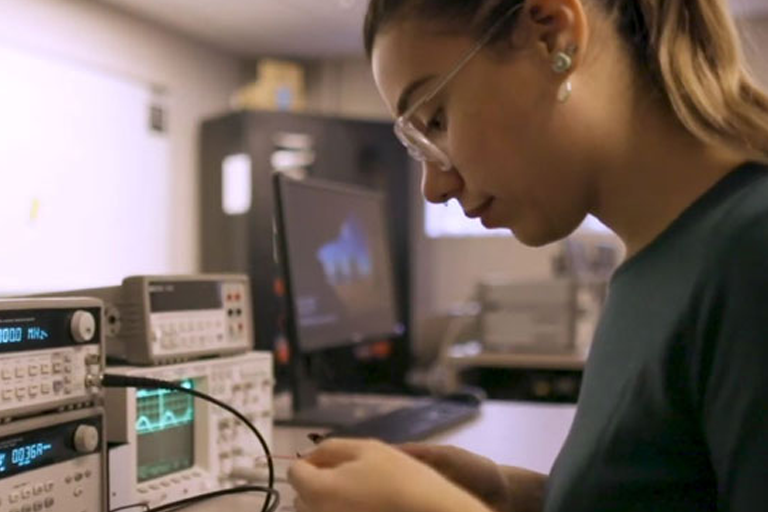
Student Research
As an R1 research university, Northeastern offers all students—undergraduate, masters, and PhD—opportunities to participate in a wide range of interdisciplinary research projects, and offers resources and support to encourage innovation. Students can work with faculty in their labs, as part of research centers, on co-op, or conduct individual research. Students can also present their research at university events, professional society and association conferences, and participate in regional, national and global competitions.
View engineering faculty profiles for research focus areas and lab information.
Student Clubs and Global Experiences
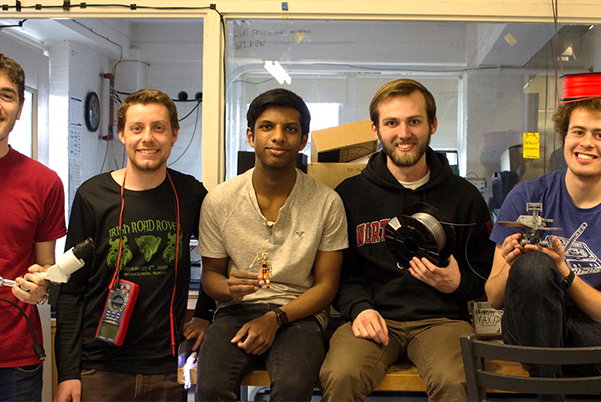
Student Organizations
The Northeastern University Wireless Club is an electronics experimentation club, where students from all disciplines can meet to work on projects and learn electronics through hands-on application. Students can also participate in service learning such as teaching robotics to middle school children in the Boston community.
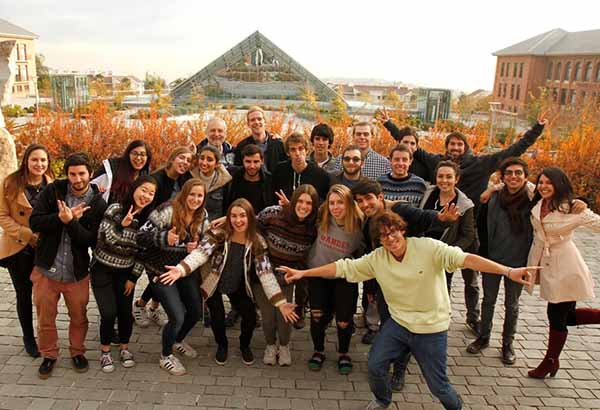
Global Experiences
Students traveled to Chile for a Dialogue of Civilizations course over the summer led by ECE Professor Chuck DiMarzio where they learned about biomedical imaging as well as financial, political, cultural, and social issues in another country.
Student Experiences
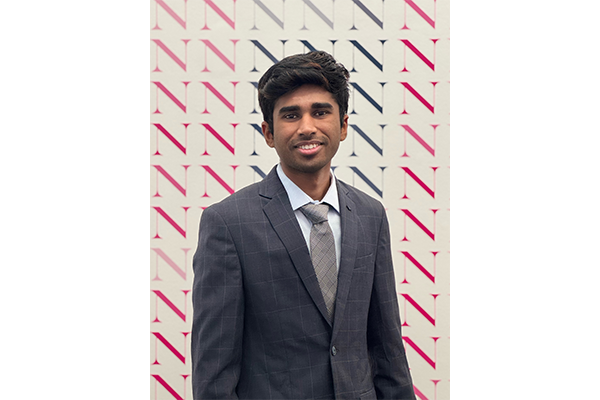
Where Impact Meets Innovation, Abhiram Elango, MS’25
Abhiram Elango, MS’25, electrical and computer engineering, recently completed his master’s degree at Northeastern. Armed with new confidence and expertise, he is now pursuing roles in wireless communications where he can work closely with customers and see the direct impact of his work.
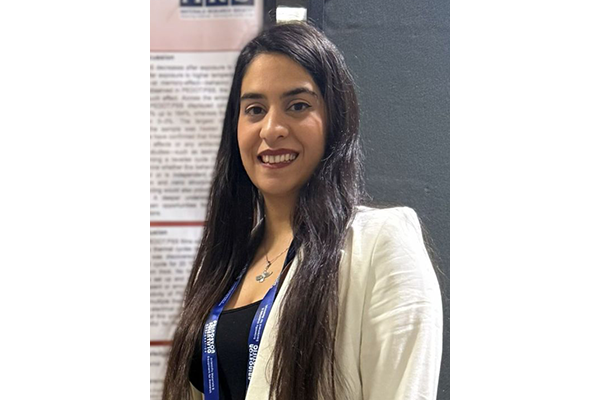
Spoiled: How One Polymer Could Change the Way We Trust Our Food and Medicine
Tara Arjomandbigdeli, PhD’27, is an interdisciplinary engineering researcher at Northeastern’s eSOIL, a lab where she is developing a heat-sensitive polymer label designed to protect consumers by detecting when temperature-sensitive products like food or medication have spoiled. With plans to launch a startup from her research, she hopes to bring the technology to market—and eventually into every home.
Best Paper Award at 3DV 2026 for LAPA Multi-Camera Point Tracking
ECE Associate Professor Sarah Ostadabbas and her team of PhD, MS, and postdoctoral researchers at the Augmented Cognition Lab received the Best Paper Award at the 2026 International Conference on 3D Vision for their paper on “Look Around and Pay Attention: Multi-camera Point Tracking Reimagined with Transformers”.
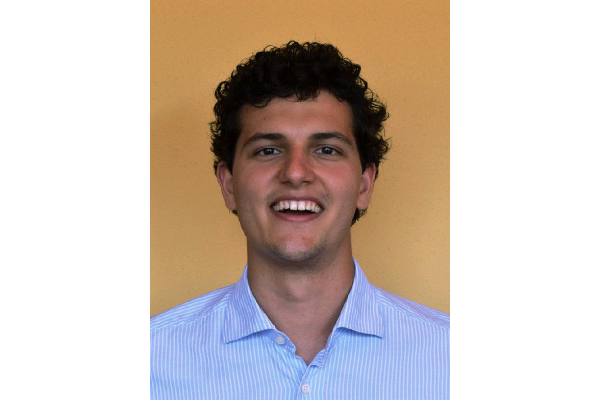
Innovation in the World of Wireless Communication
Pietro Brach del Prever, PhD’27, computer engineering, is conducting research at the Institute for Intelligent Networked Systems. With the support of Northeastern and a drive to push boundaries, Brach del Prever continues to dedicate himself to research that advances wireless communication.